
Behind the Build
Behind the design decisions, the site visits, and the construction process for a closer look at how we build in Southern New England.
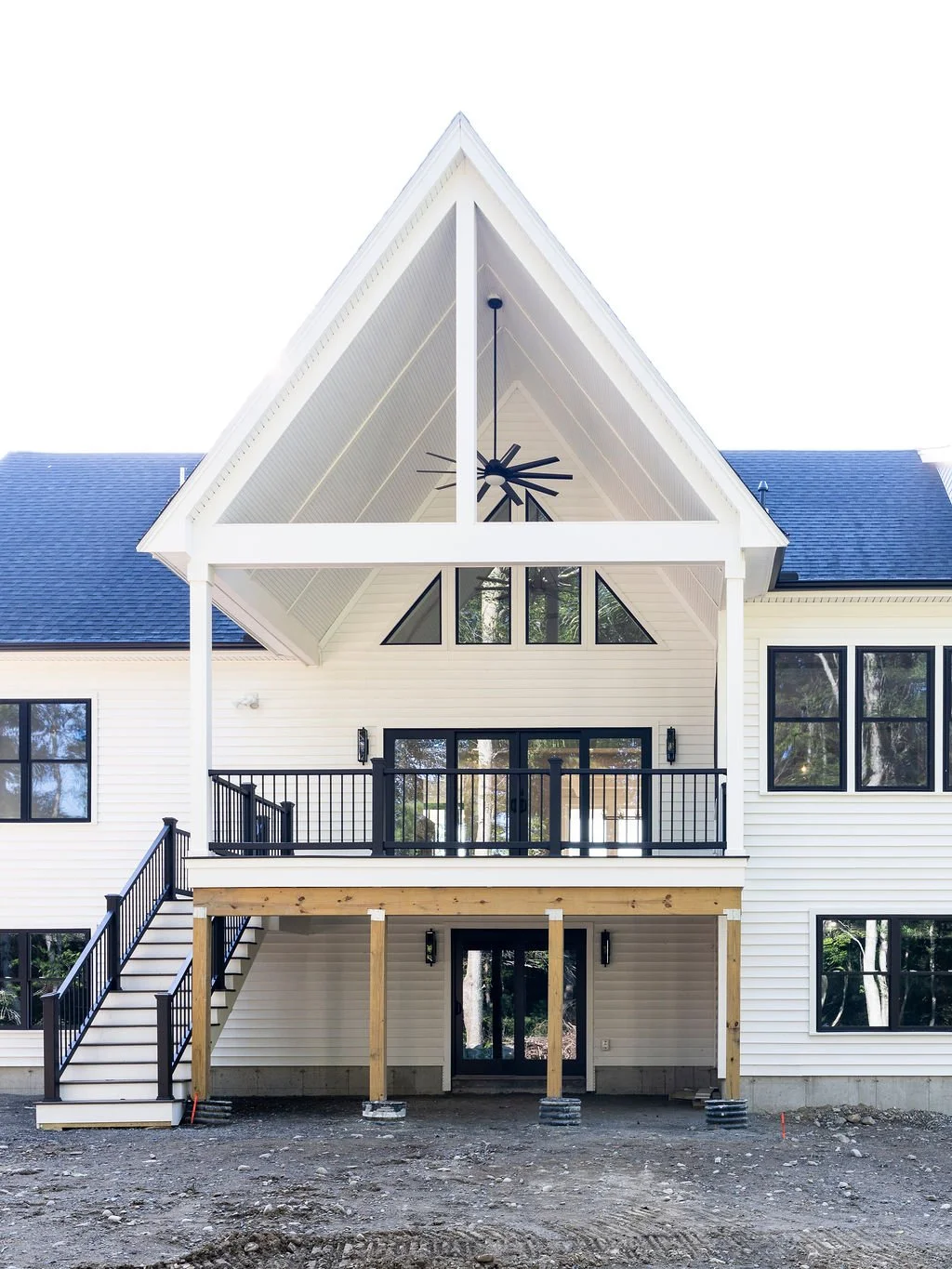
What to Look for When Hiring a Design-Build Firm (And the Questions You Should Be Asking)
Not sure how to evaluate a design-build firm for your custom home project? Here are the questions that matter — and the answers that separate credible firms from the rest.
Hiring a design-build firm for a custom home or major renovation is a significant decision — one that most people make once and learn from in hindsight. The firms that look credible on a website aren't always the ones that perform when the project gets complex, schedules slip, or something unexpected turns up behind a wall.
This post is our honest guide to evaluating a design-build firm — including the questions we think you should ask us. A firm that's worth hiring should welcome this kind of scrutiny. If they don't, that tells you something.
Start With Completed Work, Not Renderings
Any firm can produce compelling renderings and mood boards. What matters is what they've actually built — and whether the finished product matches the promise. When you're reviewing a firm's portfolio, look for completed projects, not just in-progress or conceptual work. Ask to see the home in person if possible. Photographs are curated; reality isn't.
Specifically: does the quality of the finished work hold up in the details? Trim work, transitions between materials, how windows are set in openings, how exterior cladding handles corners and terminations — these are the things that separate disciplined construction from work that looks good in wide-angle photography but reveals its limits up close.
Ask About Who's Actually Running Your Project
At larger firms, the principal who sells the project is often not the person who manages it day to day. Your project gets handed to a project manager you've never met, who may be running four other jobs simultaneously. This isn't automatically a problem — experienced project managers can run complex jobs well — but it's worth understanding the structure before you commit.
At Beacon Built, Joe Correia and Henry Viveiros are directly involved in every project. Not as figureheads who show up for the client meeting and disappear — as the people actually running the work. That's a deliberate choice, and it's one of the things clients consistently tell us matters most to them in hindsight.
The question to ask any firm: who specifically will be managing my project day to day, and how many other active projects will they be running simultaneously?
Verify Licensing and Insurance — Every Time
This should be table stakes, but it's worth saying plainly: verify that any contractor you're considering is licensed in the state where your project is located, and ask for a certificate of insurance before you sign anything. In Rhode Island and Massachusetts, contractor licensing is state-specific. A firm licensed in Massachusetts is not automatically licensed to work in Rhode Island, and vice versa.
Beacon Built is fully licensed and insured in both Rhode Island and Massachusetts. We provide certificates of insurance to any client who requests one, and we'd be skeptical of any firm that hesitates on that request.
Understand How They Handle the Unexpected
Every construction project encounters something unexpected. The question isn't whether surprises will happen — it's how the firm handles them when they do. A firm's answer to this question tells you a lot about their transparency and their culture.
What you want to hear: a clear process for documenting and communicating changes, a change order protocol that requires client approval before additional cost is incurred, and examples of how they've navigated unexpected conditions on past projects. What you don't want to hear: vague reassurances that they handle things as they come up, or a reluctance to discuss the topic at all.
Ask specifically: how do you handle change orders, and can you walk me through an example of an unexpected condition you encountered on a recent project and how you managed it with the client?
Ask for References — and Actually Call Them
References are only useful if you use them. Most people ask for references and never call. The clients who do call almost always say they wish they'd done it before every major hire they've ever made.
When you do call: ask open-ended questions, not yes/no ones. Not 'were you happy with the project?' but 'what surprised you about working with them?' and 'what would you do differently?' and 'how did they handle problems when they came up?' The answers to those questions are more revealing than any portfolio or proposal.
We're glad to provide references from completed projects in Rhode Island and Massachusetts, including clients whose homes you can visit if you'd like to see the work in person.
Understand the Contract Structure
Design-build contracts vary significantly in how they're structured. Some firms use a fixed-price contract — you agree on a total price and the firm absorbs cost overruns (or builds significant contingency into the number to protect themselves). Others use a cost-plus model, where you pay actual costs plus a management fee. Each has tradeoffs.
Fixed-price contracts offer budget certainty but can create incentives for the builder to cut corners when costs run high. Cost-plus contracts offer transparency into actual costs but shift budget risk to the client. Understanding which model a firm uses — and why — is an important part of the evaluation.
Regardless of the contract type, make sure the scope of work is documented in specific detail before you sign. Vague scope language is where disputes are born.
Trust Your Read on the Relationship
Custom home construction is a 12 to 18 month relationship with high stakes and frequent decisions. The technical qualifications matter — but so does whether you trust the people you're working with, whether they communicate in a way that works for you, and whether they're the kind of firm that tells you what you need to hear rather than what you want to hear.
We'd rather lose a project in the evaluation phase than take on a client relationship that isn't a genuine fit on both sides. If the first few conversations don't give you confidence, pay attention to that signal.
Questions Worth Asking Any Design-Build Firm
Who will manage my project day to day, and how many active projects will they have simultaneously?
Can you provide proof of licensing in Rhode Island and/or Massachusetts and a current certificate of insurance?
How do you handle change orders and unexpected conditions?
Can I speak with clients from projects similar to mine in scope and location?
Can I visit a completed project in person?
How is your contract structured, and how is the scope of work documented?
What happens if the project comes in over budget?
How do you communicate with clients during construction — how often, through what channel, and who's my primary contact?
We Welcome the Scrutiny
If you're evaluating design-build firms for a custom home or renovation project in Rhode Island or Southeastern Massachusetts, we'd be glad to answer any of these questions directly.
Schedule a complimentary consultation at beaconbuiltllc.com/contact or call 508-962-6795.
Why We Use 3D Color Renderings on Every Project — And How It Changes the Build Process
Beacon Built includes 3D color renderings as a standard part of every custom home project. Here's why — and how seeing your home before it's built leads to better decisions and fewer surprises.
Most design-build firms and general contractors don't offer 3D color renderings. Some offer basic sketches or two-dimensional floor plans. A few offer simple 3D models on request, usually as a paid add-on. At Beacon Built, 3D color renderings are a standard part of our design process — not an upgrade, not an extra line item, but something every client gets before construction begins.
We made that decision deliberately, and it's worth explaining why — because it reflects something fundamental about how we think the design-build process should work.
What 3D Color Renderings Actually Show You
A floor plan tells you how space is organized. An elevation drawing tells you how a facade is composed. A 3D color rendering tells you what your home will actually look like — the exterior massing from street level, the way materials and colors work together, how windows are proportioned, how the roofline reads against the sky.
For most clients, this is the first moment the home stops being an abstraction and becomes something real. The rendering isn't a photorealistic simulation — it's a clear, high-quality visual representation that lets you evaluate design decisions before they become physical reality.
What clients consistently notice in the rendering phase: things they want to change. A window they thought they wanted that looks off in context. An exterior color combination that seemed right on a paint chip but doesn't read the way they expected at full scale. A roofline detail that works better simplified. A garage door proportion that needs adjustment.
Every one of those observations, caught in the rendering phase, costs nothing to fix. The same observation made during framing costs real money and real time.
The Real Cost of Deciding Late
Construction is a sequence of locked-in decisions. Once the foundation is poured, you can't move it. Once framing is complete, changing window locations means cutting and reframing. Once exterior cladding is installed, changing materials means removing and replacing work that was already paid for.
The construction industry has a term for this: the cost of change increases dramatically as a project progresses. A design change in the planning phase might cost an hour of drafting time. The same change during framing might cost $5,000 to $15,000. The same change after exterior work is complete might cost $30,000 or more.
3D renderings exist to push design decisions as far upstream as possible — into the phase where they're cheap to make, cheap to revisit, and cheap to change. That's not a luxury; it's intelligent risk management for a significant investment.
How Renderings Affect Material and Color Decisions
One of the most practical applications of 3D renderings is material and color selection. Choosing exterior siding color, trim color, roofing material, window frame color, and door finish from physical samples is genuinely difficult — the brain doesn't easily extrapolate from a 4-inch paint chip to a full exterior elevation. What looks like a sophisticated warm gray on a sample board can look muddy and flat at full scale. What looks like a bold accent color in isolation can look garish when it's covering 40 percent of a facade.
Renderings let clients see these combinations at something approaching real scale, in context, before any material is ordered. We've had clients who were confident in their selections change course significantly after seeing the rendering — not because their instincts were wrong, but because the rendering revealed something the samples couldn't.
The same applies to 3D interior views, which we include for key spaces on more complex projects. Seeing a kitchen layout in three dimensions — understanding how the island relates to the perimeter cabinetry, how the ceiling height reads, how natural light enters the space — is more useful than any floor plan for evaluating whether a layout works the way clients imagine.
What Renderings Don't Replace
A rendering is a design tool, not a promise. Materials, light conditions, and the organic character of built architecture always differ from any digital representation. We're transparent about this with clients: the rendering is a decision-making aid, not a preview of an exact outcome.
What renderings also don't replace is the conversation. The value of the rendering phase isn't just the image — it's the structured opportunity it creates to look at your home with fresh eyes, ask questions, and make decisions before the opportunity to make them cheaply has passed. We treat the rendering review as one of the most important meetings in the project, not a formality.
Why We Include It as Standard
We include 3D renderings in our standard process because we've seen what happens when clients have to make design decisions from floor plans alone, and we've seen what happens when they have renderings to work from. The outcomes aren't close. Clients who've seen their home in three dimensions before construction begins are more confident in their decisions, make fewer costly changes during construction, and are more satisfied with the finished product.
That's not a coincidence. It's a direct result of having the information you need to decide well, at the moment when deciding well is still inexpensive.
If you're planning a custom home or major renovation in Rhode Island or Southeastern Massachusetts and want to understand what our design process looks like in practice, we'd be glad to walk you through it.
Schedule a complimentary consultation at beaconbuiltllc.com/contact or call 508-962-6795.
How Much Does a Home Addition or Whole-Home Renovation Cost in Rhode Island or Massachusetts?
Planning a home addition or whole-home renovation in Rhode Island or Massachusetts? Here's an honest cost breakdown by project type — with real ranges for Southeastern MA and East Bay RI.
Renovation and addition projects are some of the most misunderstood in residential construction — not because the work is mysterious, but because cost varies so dramatically based on scope, existing conditions, and what's discovered once walls come open. Clients who've done their research often come in with numbers pulled from national cost guides that don't reflect what things actually cost to build in Southern New England in 2026.
This post is an honest look at what home additions and renovations typically cost in Rhode Island and Southeastern Massachusetts, what drives that number up or down, and how to think about budgeting before you've committed to a scope.
Home Additions: What to Expect
A home addition involves expanding your home's footprint — adding square footage that didn't exist before. The cost per square foot for addition work is typically higher than new construction, not lower, because you're tying new structure into an existing building. That transition — matching foundations, rooflines, framing systems, and finishes — adds complexity that a ground-up build doesn't have.
In Rhode Island and Southeastern Massachusetts, budget $300 to $500 per square foot for a well-built home addition, depending on the type of space being added and the finish level. Here's how common addition types break down:
Primary suite additions sit at the higher end of that range. A first-floor or second-floor primary bedroom and bath addition typically runs $150,000 to $300,000 depending on size, bathroom finish level, and the structural work required to connect it to the existing home.
Family room or great room additions are generally more straightforward structurally and tend to run $100,000 to $200,000 for a well-built, well-finished space. The range widens based on ceiling height, window package, and whether the addition requires a new foundation or can tie into an existing slab or crawl space.
Garage additions — either attached or detached — typically run $60,000 to $120,000 for a standard two-car configuration. Adding living space above the garage (a bonus room, home office, or accessory suite) adds $80,000 to $150,000 to that number depending on finish level and HVAC requirements.
In-law suites and accessory dwelling units are increasingly popular in our market, particularly in Rhode Island where ADU regulations have loosened in recent years. Budget $150,000 to $300,000 for a well-designed, self-contained accessory unit with its own kitchen and bath.
Whole-Home Renovations: What to Expect
A whole-home renovation is exactly what it sounds like — a comprehensive overhaul of an existing home, typically touching structural systems, mechanical systems, and finishes throughout. These projects are complex, inherently unpredictable (existing conditions always hold surprises), and require a firm that can manage both design and construction simultaneously.
For a whole-home renovation in Rhode Island or Massachusetts, budget between $150 and $350 per square foot of renovated space, depending on the depth of the renovation and the age and condition of the existing structure. A 2,000 square foot home renovated at that range puts total cost between $300,000 and $700,000.
The most significant variable in renovation pricing is what's behind the walls. Older homes — particularly those built before 1980 — frequently contain surprises: outdated electrical panels, knob-and-tube wiring, galvanized plumbing, inadequate insulation, or structural issues that weren't visible before demo. We always recommend building a contingency of 10 to 15 percent into renovation budgets specifically to absorb these discoveries without derailing the project.
Kitchen Renovations
Kitchen remodels are the most common renovation project we see, and the range is wide. A mid-range kitchen renovation with semi-custom cabinetry, stone countertops, and quality appliances typically runs $60,000 to $120,000. A fully custom kitchen — bespoke cabinetry, high-end appliance suite, specialty stone, structural changes to open the layout — can run $150,000 to $250,000 or more.
The layout question drives a lot of the cost: keeping plumbing and appliances where they are costs less than relocating them. If the renovation involves moving a load-bearing wall to open the kitchen to the living area — which is increasingly common — add structural engineering fees and beam work to the budget.
Bathroom Renovations
A quality bathroom renovation in our market runs $25,000 to $60,000 for a standard full bath, and $60,000 to $120,000 for a primary bathroom with a custom tile shower, freestanding soaking tub, and high-end fixtures. These numbers assume a renovation within the existing footprint. Expanding the bathroom's square footage crosses into addition territory and is priced accordingly.
What Drives Renovation Costs Higher
Age of the existing structure is the biggest wildcard. Homes built before 1978 may contain lead paint or asbestos, both of which require licensed abatement before renovation work can proceed — adding cost and time. Homes with older electrical systems often require panel upgrades to support modern loads. Old cast iron or galvanized plumbing frequently needs full replacement once the walls are open.
Permit requirements add cost but also accountability. Any renovation involving structural changes, electrical, plumbing, or mechanical work requires permits in Rhode Island and Massachusetts. We manage all permitting as part of our scope — which means the work is done correctly and inspected, protecting you as a homeowner.
Finish selections have an outsized impact on final cost. Tile, cabinetry, countertops, fixtures, and flooring can vary by a factor of three or four between builder-grade and high-end custom selections. We help clients understand where premium materials have lasting impact and where they don't, so budget gets allocated where it matters most.
Is It Better to Renovate or Build New?
This is a question we get often, and the honest answer depends on the specific home, the specific lot, and what the client is trying to achieve. If the existing structure has good bones, a desirable location, and meaningful character worth preserving, renovation often makes more sense. If the existing home has significant deferred maintenance, a poor layout that can't be corrected without essentially rebuilding it, or sits on a lot that's more valuable than the structure, new construction may be the better long-term investment.
We're happy to give an honest assessment of that question for your specific situation — without a bias toward one path or the other. The right answer is the one that serves your goals and your budget.
Ready to Talk Through Your Project?
Whether you're planning an addition, a whole-home renovation, or trying to decide between renovating and rebuilding, the best starting point is a conversation. We offer a complimentary initial consultation and can give you meaningful cost guidance based on your actual home, scope, and goals.
Schedule a consultation at beaconbuiltllc.com/contact or call 508-962-6795.