
Behind the Build
Behind the design decisions, the site visits, and the construction process for a closer look at how we build in Southern New England.
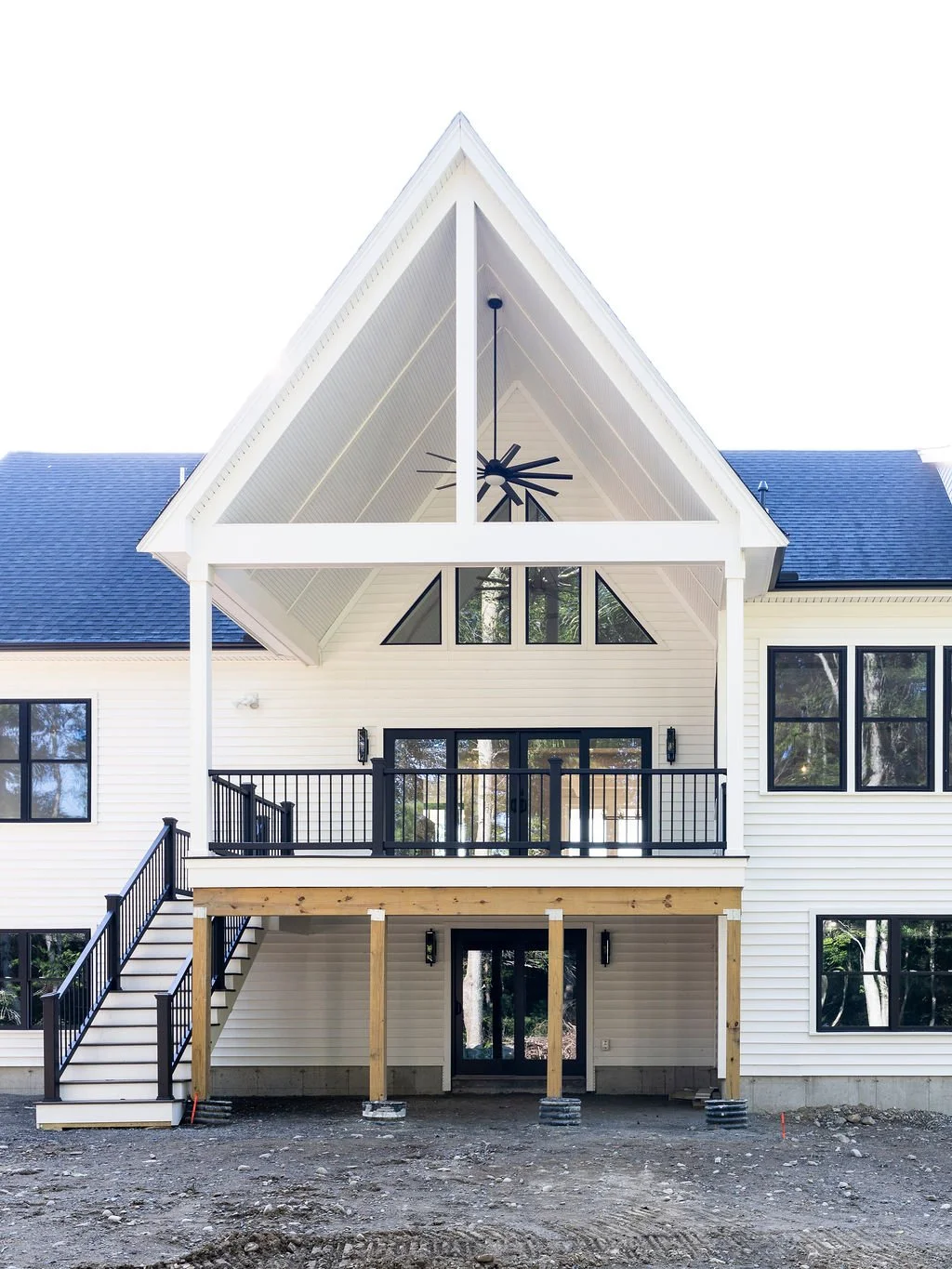
Building a Custom Home in Rehoboth, MA: What to Know Before You Start
Planning a custom home in Rehoboth starts with understanding both the property and the process. From zoning and septic considerations to site planning, design, and budgeting, this guide walks through the key decisions that can shape a successful build.
Rehoboth, Massachusetts offers something increasingly difficult to find in Southeastern New England: room to build a home around the way you actually want to live.
With larger properties, a rural character, convenient access to Rhode Island and Southeastern Massachusetts, and a mix of wooded and open landscapes, Rehoboth can be an appealing place to build a custom home. But building here also requires careful planning.
Unlike purchasing a finished home in an established neighborhood, custom home construction begins with understanding the land itself. Septic requirements, wetlands, zoning, setbacks, site access, drainage, home placement and permitting can all influence what ultimately makes sense for a property.
For homeowners considering new construction in Rehoboth, here are some of the most important things to understand before beginning the design process.
Start With the Land, Not the Floor Plan
One of the most common mistakes in custom home planning is selecting or designing a house before fully understanding the property where it will be built.
A plan that works beautifully on one parcel may need significant changes on another.
Before finalizing a custom home design, your builder and design team should understand factors such as:
lot dimensions and frontage
topography and grading
wetlands and natural resource areas
septic and well locations
driveway access
solar orientation
drainage
required setbacks
usable building area
existing vegetation and site features
These aren't simply permitting considerations. They can directly influence how the home should be oriented, where outdoor living areas belong, where windows capture the best light and views, and even which floor plan makes the most sense.
For that reason, Beacon Built approaches custom home design as a relationship between the home, site and homeowner, rather than treating the house as a standalone set of plans.
Understand Rehoboth's Lot and Setback Requirements
Rehoboth's predominant Residential/Agricultural zoning reflects the town's lower-density character.
Town zoning materials establish minimum requirements for residential lots, including lot area, frontage and building setbacks. For Residential/Agricultural districts, published zoning materials identify a minimum lot area of 60,000 square feet and 200 feet of frontage, along with minimum front, side and rear setbacks. Actual requirements can depend on the property and applicable zoning, so the current regulations should always be reviewed during site planning.
This is one reason early site evaluation matters.
A large lot does not automatically mean the entire property can be used for construction. Wetlands, septic areas, easements, setbacks and other restrictions can substantially change the home's available building envelope.
Septic Planning Is a Major Part of Building in Rehoboth
Many Rehoboth properties rely on private septic systems rather than municipal sewer.
Massachusetts septic systems are governed by Title 5, the state's environmental code regulating on-site wastewater disposal systems. Rehoboth also maintains supplementary local requirements.
The septic system can affect:
home placement
bedroom count
driveway placement
landscaping
future additions
pool locations
accessory structures
usable backyard space
Rehoboth's local regulations also require septic design plans to identify nearby site features such as wetlands, streams, ponds, wells and floodplain information.
That means septic should be treated as part of the home's overall site plan rather than something addressed after the architecture has already been finalized.
Wetlands Can Influence the Buildable Area
Rehoboth's rural landscape includes wetlands, streams and other protected resource areas.
If wetlands are present or suspected, determining their boundaries early can save significant time later in the planning process.
The Town of Rehoboth explains that an Abbreviated Notice of Resource Area Delineation, or ANRAD, can be used to formally establish resource-area boundaries before detailed engineering is completed. Certain projects near regulated wetlands may instead require a Request for Determination of Applicability or Notice of Intent through the Conservation Commission.
Rehoboth also maintains local septic requirements relating to bordering vegetated wetlands, including restrictions on where leaching facilities may be located.
For someone considering purchasing land, understanding these conditions before closing on a property can be particularly valuable.
Budget for More Than the House Itself
When people begin researching the cost of building a custom home in Rehoboth, they naturally focus on construction cost. But the house itself is only one part of the investment.
A realistic custom-home budget may also need to account for:
architectural and design services
surveys
engineering
soil testing
septic design and installation
well installation
clearing
excavation
grading
utility connections
driveway construction
permitting
landscaping
site drainage
finish selections
contingency
Two homes with similar square footage can therefore have very different total project costs.
Site conditions, architectural complexity and finish level often matter as much as size.
Design Around How You Actually Live
One of the primary advantages of custom construction is the ability to move beyond a standard floor plan.
Before beginning design, think less about the number of rooms you want and more about how you want the home to function.
Consider questions like:
How do people enter the house every day?
Do you entertain frequently?
Would you prefer an open kitchen or some separation between rooms?
Do you need a first-floor primary suite?
Will aging parents or adult children eventually live with you?
Where should morning and afternoon light enter the house?
Do you need a dedicated home office?
How important are outdoor living spaces?
Would a future pool, detached garage or accessory structure be part of the long-term plan?
A strong custom-home design considers both present-day needs and how the property may evolve over time.
Choose a Builder Early
Homeowners sometimes wait until architectural plans are complete before speaking with a builder.
A design-build approach changes that sequence.
By involving construction expertise during design, decisions about architecture, materials, structure, site work and budget can be evaluated together rather than sequentially.
That can be especially helpful on properties with complex site conditions.
Beacon Built's process brings architectural design and construction management together so clients can move from early concepts through construction with greater continuity.
Building in Rehoboth With Beacon Built
Beacon Built designs and builds custom homes throughout Rehoboth and Southeastern Massachusetts, including homes tailored to individual properties, lifestyles and architectural preferences.
Our approach begins by understanding both the client and the site. From early property evaluation and architectural design through permitting, construction management and final completion, we coordinate each phase around one overall vision.
For homeowners who are still searching for land, Beacon Built is also a select custom builder at Liberty Estates in Rehoboth, offering opportunities to design a home around available homesites within the new development.
Planning a custom home in Rehoboth? Explore our custom home portfolio, learn more about Liberty Estates, or contact Beacon Built to begin discussing your property and project.
Custom Home vs. Spec Home: Which Makes Sense in a New Development?
A new construction home can offer very different levels of personalization depending on how it is built. We break down the difference between custom and spec homes, including design flexibility, timeline, decision-making, and which approach may be the better fit for your priorities.
New construction doesn't always mean custom construction.
If you're considering buying in a new residential development, you'll often encounter several different ways of purchasing a home.
At one end is a spec home: a house largely designed and selected by the builder before the buyer becomes involved.
At the other is a custom home, where the future homeowner plays a meaningful role in shaping the architecture, layout and selections.
Neither approach is universally better.
They serve different buyers.
Here's how to decide which may be right for you.
What Is a Spec Home?
A speculative, or “spec,” home is designed and constructed by a builder based on what the builder believes will appeal to the market.
Depending on when you purchase, you may have some ability to choose finishes.
But major decisions such as the floor plan, footprint and architecture have typically already been determined.
For buyers, the advantages can include:
shorter timeline
fewer decisions
clearer understanding of the finished product
potentially more predictable pricing
easier comparison with other available homes
For someone who wants a new home without going through a full design process, a spec home can be an excellent fit.
What Is a Custom Home?
A true custom home begins with the homeowner.
Rather than selecting a predesigned house, the architecture is developed around factors such as:
household
lifestyle
property
design preferences
future plans
budget
That can influence everything from where the mudroom sits to how the kitchen relates to the living areas, which direction the home faces and where the primary suite is located.
The result is a home that has been designed specifically for the client and site.
Custom Doesn't Mean Unlimited
It's worth clarifying one common misconception.
“Custom” does not necessarily mean that every single element of a house has to be unprecedented, extravagant or expensive.
Customization is fundamentally about choice and intention.
A client may want a relatively traditional New England home but need:
first-floor living
larger pantry
two home offices
dedicated playroom
multigenerational suite
oversized mudroom
three-car garage
future pool
specific relationship between kitchen and entertaining spaces
Those functional decisions can be just as important as architectural style.
How Much Control Do You Want?
This is often the easiest way to decide between custom and spec.
A spec home may work well if your priorities are:
“I want something new, attractive and move-in ready.”
A custom home may be more appropriate if you find yourself saying:
“I know exactly how I want certain parts of my house to work.”
The more specific your needs become, the more valuable the custom process tends to be.
Consider Your Timeline
Spec homes generally offer greater speed because much of the design and permitting work has already occurred, and construction may already be underway.
Custom homes require an earlier planning phase.
That phase may include:
property evaluation
architectural concepts
design development
engineering
selections
permitting
budgeting
construction documentation
For homeowners who aren't facing an immediate move-in deadline, that additional planning time can create a home better aligned with long-term needs.
Consider Decision-Making
Some people love the idea of participating in the design of their future home.
Others find hundreds of decisions overwhelming.
Be realistic about which category you're in.
A good custom-home process shouldn't require the homeowner to manage construction themselves, but it does require collaboration.
Your design-build team should guide decisions, present options and help keep the project aligned with the overall vision.
What About Semi-Custom Homes?
Semi-custom construction falls between the two.
A builder might offer several plans and allow buyers to modify layouts or finishes within defined parameters.
For some buyers, this creates a useful balance between personalization and efficiency.
However, it's different from beginning with the client and property and developing the architecture accordingly.
Custom Homes Within Liberty Estates
Liberty Estates in Rehoboth offers an interesting combination: the benefits of a new residential development with the opportunity to pursue an individualized custom-home process.
Beacon Built is one of the select builders serving the development.
Our role is not simply to place the same finished product on every available lot.
We work with clients who want to think about:
how their family lives
how rooms relate
architectural character
site orientation
future needs
material selections
details that make the home feel individual
That means buyers can be part of a new neighborhood while still creating a home specific to them.
Which Approach Is Right for You?
A spec home may be the right choice if you value convenience, speed and having many decisions already made.
A custom home may be the better fit if the ability to shape the layout, architecture and details is central to why you're building new in the first place.
The important thing is knowing which experience you're actually purchasing.
Interested in building a custom home in Rehoboth? Explore Liberty Estates and Beacon Built's custom-home portfolio, or contact our team to start a conversation about your goals.
Buying Land in Rehoboth, MA: Septic, Wetlands, Setbacks & Site Planning
Not every piece of land is equally suited for new construction. This guide covers what to evaluate before buying a homesite in Rehoboth, including septic, wetlands, setbacks, access, topography, and overall buildability.
Finding a beautiful piece of land can make it easy to begin imagining the house immediately.
But when purchasing property for a custom home in Rehoboth, the better first question is:
What can actually be built here?
A parcel's acreage tells only part of the story. Septic requirements, wetlands, setbacks, frontage, drainage, topography, access and soil conditions can all affect how much of a property is truly usable.
Here are some of the most important items to investigate before purchasing land for a custom home in Rehoboth.
1. Confirm That the Lot Is Buildable
A property being listed as land does not automatically guarantee that it can accommodate the house you envision.
Before purchasing, review:
zoning district
lot size
frontage
setbacks
deed restrictions
easements
wetlands
septic feasibility
well placement
driveway access
utility availability
Rehoboth's Residential/Agricultural zoning regulations generally establish minimum lot and frontage requirements and regulate how far structures must sit from property lines.
A surveyor, civil engineer, attorney and qualified builder can help determine how those requirements apply to a particular parcel.
2. Understand the Septic System
Because many Rehoboth homes use on-site septic, wastewater planning can be one of the most consequential parts of evaluating land.
Massachusetts septic systems are regulated under Title 5, with local Board of Health requirements potentially adding additional standards.
For a prospective homeowner, septic feasibility can influence both whether a lot can support the intended home and where the home can be positioned.
A septic system needs adequate space for its components while maintaining required separation from wells, wetlands and other protected features.
The proposed bedroom count also matters because residential septic systems are designed based partly on anticipated wastewater flow.
Before purchasing an unimproved lot, determine what testing or septic engineering has already been completed and what additional work may still be needed.
3. Identify Wetlands Early
Wetlands are not always obvious from walking a property.
Wooded land that looks dry at one time of year can still contain regulated resource areas.
Rehoboth recommends establishing wetland boundaries before detailed engineering when resource areas could influence development. An ANRAD can formally confirm certain boundaries, while construction that may affect wetlands or associated regulated areas can trigger additional Conservation Commission review.
For buyers, this matters because a ten-acre property does not necessarily provide ten acres of unrestricted building area.
Knowing the site's actual constraints lets you evaluate the property based on its usable building envelope, not simply total acreage.
4. Look Beyond Basic Setbacks
Property setbacks determine how far a home must be positioned from lot boundaries, but they're only one layer of site planning.
A proposed home may also need adequate room for:
septic components
well
driveway
drainage
grading
utility runs
outdoor living
accessory structures
future pool
garage
landscaping
Once those pieces are assembled, the ideal location of the home may become much clearer.
5. Evaluate Topography and Site Work
A relatively flat, cleared lot may require substantially less preparation than a heavily wooded, sloped or wet property.
Potential site costs include:
tree clearing
stump removal
rock removal
excavation
fill
retaining walls
grading
stormwater management
long utility runs
extended driveway construction
This is why a seemingly inexpensive parcel can sometimes become more expensive than a higher-priced property with simpler site conditions.
The price of the land should never be evaluated separately from the probable cost of preparing it for construction.
6. Think About Home Orientation
Site planning isn't solely about constraints. It's also where some of the most important design opportunities emerge. A thoughtful site plan can consider:
morning versus afternoon sunlight
views
privacy
mature trees
prevailing weather
road exposure
outdoor living
garage placement
approach to the home
future landscaping
Custom home design is strongest when the architecture responds to the property rather than simply being placed onto it.
7. Consider Future Plans Before You Buy
Even if certain features aren't part of the first phase of construction, tell your builder about them.
Perhaps you eventually want:
a swimming pool
detached garage
guest house
accessory dwelling unit
large garden
sports court
expanded outdoor entertaining area
Planning for those possibilities before locating the house and septic system can preserve flexibility later.
Before You Purchase Land, Assemble the Right Team
Ideally, buyers should evaluate a prospective building lot with input from relevant professionals before making irreversible commitments.
That may include a:
custom builder
architect or residential designer
civil engineer
surveyor
soil evaluator
real estate attorney
Your exact team will depend on the property.
Looking for Land in Rehoboth?
Beacon Built works with clients from the earliest stages of custom home planning, including evaluating how a home may relate to a prospective site.
Beacon is also a select custom builder within Liberty Estates, a new residential development in Rehoboth offering an alternative for clients who want the benefits of new construction and a new neighborhood while still designing an individualized home.
Before choosing a floor plan, choose the right piece of land.
Contact Beacon Built to discuss a Rehoboth property, explore Liberty Estates, or begin planning a custom home in Southeastern Massachusetts.
What to Look for in a Rehoboth Homesite Before Designing Your Custom Home
The right homesite should support both the house you want to build and the way you want to live. This article explores how sunlight, privacy, topography, septic placement, wetlands, future plans, and site orientation can all affect the design of a custom home.
The best homesites aren't necessarily the largest, flattest or most expensive. They're the lots that work well for the home and lifestyle you want to create.
When comparing properties in Rehoboth, buyers naturally notice obvious qualities first: acreage, neighborhood, trees and views. A custom builder looks deeper.
The shape of the property, sunlight, topography, wetlands, septic layout, driveway approach and orientation can all influence how successful the eventual home will be.
Consider the Buildable Area, Not Just Acreage
A five-acre parcel isn't necessarily more usable than a two-acre parcel.
Wetlands, easements, setback requirements and septic areas can all reduce where construction can occur.
Rehoboth's Residential/Agricultural zoning establishes dimensional requirements relating to lot area, frontage and setbacks.
Before becoming attached to a particular home concept, understand the lot's actual building envelope.
Pay Attention to Sunlight
Orientation can transform the experience of a home.
A design team may consider where the sun rises and sets when locating spaces such as:
kitchen
breakfast area
primary bedroom
family room
covered porch
patio
pool
You may want soft morning light in the kitchen and afternoon light across the backyard.
Or perhaps shade is more important for outdoor entertaining.
There isn't one correct orientation. The goal is to match the architecture to how you want to use the property.
Look at Privacy
A site can feel completely different depending on where the neighboring homes, roads and tree lines sit.
Consider future sightlines from:
primary bedroom
bathrooms
main living spaces
outdoor patios
pool
front porch
Thoughtful positioning can create privacy without needing to isolate the house completely.
Study the Grade
Topography affects both design opportunities and construction requirements.
A sloped lot might allow:
walk-out lower level
dramatic rear elevation
tiered landscape
elevated views
But it can also require additional excavation, retaining walls or drainage work.
Conversely, a flatter lot may simplify construction but offer fewer opportunities for a walk-out basement.
Neither is inherently better.
The question is whether the site supports the kind of house you want.
Understand Where the Septic System Goes
The location of a septic system affects more than wastewater.
It can also determine where you cannot later place other features.
If you eventually want a pool, detached garage or expansive backyard, tell your team before the septic layout is finalized.
Massachusetts Title 5 and Rehoboth's local septic regulations govern how systems are designed and placed in relation to site conditions and environmental features.
Identify Wetlands and Natural Features
Wetlands can shape a property's development potential, but preserved natural areas can also become part of what makes a homesite beautiful.
Rehoboth's Conservation Commission has procedures for formally identifying regulated resource areas and reviewing construction that may affect them.
Knowing where those areas are before design begins lets the architecture respond to them intentionally.
Think About the Arrival Experience
Where does the driveway enter?
How does the house reveal itself from the road?
Will visitors see the garage first, or the architecture?
Can the house sit farther back?
Could an angled approach create a better front elevation?
Custom home site planning includes the experience of arriving at the property—not just locating a rectangle within a setback envelope.
Think Five or Ten Years Ahead
A homesite should support more than your immediate construction plans.
Before choosing the location of the house, consider what else you might eventually want.
That could include:
pool
cabana
guest house
detached garage
workshop
gardens
play space
additional outdoor entertaining
multigenerational living
Planning around future possibilities can prevent today's decisions from limiting tomorrow's options.
Homesites at Liberty Estates
For homeowners who want new construction but don't necessarily want to search independently for undeveloped acreage, Liberty Estates offers another path.
Beacon Built is one of the development's select builders, providing clients with the opportunity to choose a homesite and then create a custom home around the property, architectural preferences and way they want to live.
Rather than choosing from a fixed catalog of completed houses, Beacon's approach centers on individual design within the new neighborhood.
Explore Liberty Estates in Rehoboth or contact Beacon Built to discuss available homesites and custom-home planning.
How to Find and Evaluate a Buildable Lot in Southeastern Massachusetts or Rhode Island
Looking for land to build a custom home in Rhode Island or Southeastern Massachusetts? Here's what to evaluate before you buy — lot size, zoning, septic suitability, wetlands, and more.
For many people planning a custom home, the land question comes first — and it's where the process most often gets stuck. Finding a lot that's actually buildable for the home you want, at a price that makes the overall project work financially, takes more diligence than most buyers expect.
We've helped clients evaluate dozens of lots across Rhode Island and Southeastern Massachusetts. Here's what we look at, what raises red flags, and how to approach the land search before you commit to a purchase.
Start With Zoning
Before anything else, confirm the lot's zoning designation and what's allowed by right. In most residential towns across our service area, single-family construction is straightforward — but minimum lot sizes, setback requirements, frontage requirements, and lot coverage limits vary significantly by town and by zone.
A lot that's listed as buildable may technically be buildable — but may not accommodate the footprint you want once setbacks are applied. A 1.5-acre parcel sounds generous until you pull the zoning map and realize 40 percent of it is wetland buffer, the front setback is 50 feet, and the side setbacks are 25 feet on each side. What looks like plenty of space on paper can become a tight building envelope quickly.
Most municipalities make zoning maps and bylaws available online. We can also pull this information for any parcel a client is evaluating — it's one of the first things we check.
Understand the Septic and Water Situation
Most lots in Rehoboth, Seekonk, Berkley, and the surrounding Southeastern Massachusetts communities are not served by municipal water and sewer. The same is true for much of Western Rhode Island. That means every new home needs a drilled well and a Title 5-compliant septic system — and the lot has to be able to support both.
Septic suitability depends on soil type, lot size, and proximity to wetlands and water bodies. Before a septic system can be designed, the lot needs a perc test (percolation test) to evaluate how quickly the soil absorbs water. Some soils — heavy clay, ledge-heavy areas — don't perc well and require alternative septic designs that cost significantly more than a conventional system.
If a lot hasn't been perc tested, make any purchase offer contingent on a satisfactory perc test result. This is non-negotiable. A lot that won't support a septic system for your intended home size is not a buildable lot, regardless of what the listing says.
Well drilling costs in our area typically run $8,000 to $20,000 depending on depth to water. Septic system installation runs $20,000 to $50,000 for a conventional system, and $40,000 to $80,000 or more for an alternative system on a challenging site. Both are real costs that need to be in your total project budget.
Check for Wetlands
Massachusetts and Rhode Island both have strict wetland protection regulations, and wetland resource areas — including the buffer zones around them — can significantly limit where on a lot you can build. In Massachusetts, the buffer zone around most wetland resource areas extends 100 feet from the resource area boundary. In Rhode Island, the standard buffer is 50 feet, with 200 feet around certain high-value resources.
A lot can appear open and dry on the surface while having wetland resource areas that constrain the buildable area substantially. Before purchasing any lot where wetlands might be a factor, have a licensed wetland scientist or civil engineer conduct a wetland delineation. This identifies exactly where the resource areas are and where the buffers fall, giving you a clear picture of what's actually buildable.
Building within a wetland buffer isn't always prohibited — in Massachusetts, work within the buffer zone requires an Order of Conditions from the local Conservation Commission, which adds time and process. In some cases it's manageable; in others, it's a reason to walk away from a lot.
Evaluate Topography and Site Access
Flat, cleared lots are the easiest and cheapest to build on. Wooded, sloped, or otherwise challenging sites add cost — sometimes significantly.
Tree clearing and stump removal can run $5,000 to $30,000 depending on lot size and tree density. Significant grading on a sloped site adds cost but can also create opportunities — a sloped lot often allows for a walkout basement that a flat lot doesn't, which is a meaningful square footage gain for the same foundation investment.
Driveway length and construction is a real cost that's easy to overlook. A lot set back from the road requires a longer driveway — in our area, gravel driveways run $3 to $6 per linear foot, paved driveways $8 to $15 per linear foot. A 300-foot driveway adds up quickly.
Utility connections — electric, gas if available, telecommunications — are another site-specific cost. Lots with long road frontages or located on roads without existing infrastructure may face substantial utility extension costs. Ask the utility company for a connection estimate before you close.
Look at the Neighbors and the Neighborhood Trajectory
This sounds obvious but gets overlooked in the excitement of finding a lot. What's adjacent to the parcel — and what's likely to be built there in the next five to ten years? A lot that backs up to commercial zoning, is adjacent to a large undeveloped parcel, or sits near infrastructure that might expand deserves a closer look at the town's master plan and zoning map.
In the towns we work in most — Rehoboth, Seekonk, Berkley, and the East Bay RI communities — we have a sense of neighborhood trajectories that's hard to get from a listing. If you're evaluating a specific lot and want a second set of eyes on it, we're happy to take a look.
Get a Builder Involved Before You Buy
The single best thing you can do before purchasing a lot is walk it with a builder. Not after — before. A builder who knows the local market, the permitting environment, and the site conditions can identify red flags that aren't visible in a listing, give you a rough sense of site preparation costs, and tell you whether the lot can accommodate the home you're trying to build.
We do pre-purchase lot evaluations for prospective clients at no charge. It costs us an hour; it can save you from a six-figure mistake. If you have a lot under consideration in Rhode Island or Southeastern Massachusetts, reach out before you sign.
Contact us at beaconbuiltllc.com/contact or call 508-962-6795.
Rehoboth vs. Seekonk, MA: Where Should You Build a Custom Home?
Rehoboth and Seekonk both offer compelling opportunities for custom homes, but the right choice depends on your priorities. We compare land, location, lifestyle, site conditions, convenience, and new-construction opportunities to help you understand which Southeastern Massachusetts community may be the better fit for your build.
For homeowners considering new construction near the Rhode Island–Massachusetts border, Rehoboth and Seekonk are two of the most compelling places to build a custom home in Southeastern Massachusetts.
The towns sit beside one another and both offer convenient access to Providence, but the experience of living—and building—in each can feel quite different.
Rehoboth is known for its rural landscape, larger properties, winding roads, and quieter residential character. Seekonk offers many of the same benefits of Southeastern Massachusetts living while placing homeowners closer to major roads, shopping, and the Rhode Island border.
Beacon Built designs and builds custom homes in both communities. If you're deciding between Rehoboth and Seekonk, the right choice usually comes down to property, lifestyle, location, and the type of home you want to create.
Rehoboth vs. Seekonk at a Glance
Both towns can be excellent choices for custom construction, but they tend to appeal to homeowners for slightly different reasons.
Rehoboth may be the stronger fit if you prioritize:
larger or more private properties
a rural New England setting
wooded or open land
greater separation between homes
a quieter residential environment
designing a home around a substantial homesite
Seekonk may appeal more if you prioritize:
proximity to Providence
convenient access to Rhode Island
shopping and everyday amenities nearby
established residential neighborhoods
access to Routes 6, 44 and I-195
balancing land and privacy with convenience
These are broad distinctions rather than rules. The quality of the individual property ultimately matters more than the town name alone.
Building a Custom Home in Rehoboth, MA
Rehoboth is particularly appealing to homeowners who want space.
The town's rural character is shaped by larger residential parcels, farmland, wooded properties, stone walls and lower-density development. For someone moving from a more compact Rhode Island community, that additional land can significantly change what is possible.
A larger property may create room for features such as:
expansive outdoor living
a pool
detached garage
workshop
gardens
guest accommodations
greater privacy
longer driveway approaches
It can also give the architecture more room to respond to the site itself.
Rather than designing a house around a tight urban or suburban lot, homeowners may have greater flexibility in how the residence is oriented toward sunlight, views, landscaping and outdoor spaces.
Site Conditions Matter in Rehoboth
More acreage does not automatically mean a simpler build.
Many Rehoboth properties rely on private septic and well systems, and wetlands, soil conditions, setbacks, topography and drainage can all influence the home's usable building area.
That's why we recommend evaluating the property before becoming committed to a particular floor plan.
For a deeper look at those considerations, see our guide to building a custom home in Rehoboth, Massachusetts, as well as our guide to buying land in Rehoboth.
Building a Custom Home in Seekonk, MA
Seekonk offers a different balance.
It maintains a residential, suburban character while sitting immediately along the Rhode Island border. For homeowners who work in Providence or regularly travel between Rhode Island and Massachusetts, that location can be especially convenient.
Seekonk also offers a mixture of established neighborhoods and larger properties, meaning custom-home opportunities can range from building on undeveloped land to replacing or significantly reworking an existing residence.
For buyers who want more space than they may find in communities closer to Providence without feeling removed from daily conveniences, Seekonk can be particularly attractive.
Which Town Offers More Land?
Rehoboth generally has a stronger rural identity, so buyers looking specifically for larger acreage may naturally begin their search there.
But total acreage should never be the only factor used to evaluate a homesite.
A smaller parcel with favorable soil, minimal wetlands, good frontage, useful topography and an efficient building envelope may ultimately offer more design flexibility than a much larger property with significant constraints.
Whether you're considering land in Rehoboth or Seekonk, evaluate:
zoning
setbacks
frontage
septic feasibility
wetland areas
grading
driveway access
utilities
soil conditions
orientation
surrounding development
The question isn't simply, “How large is this lot?”
It's “How much of this property works for the home we want to build?”
How Do Septic and Well Requirements Compare?
Many properties in this part of Southeastern Massachusetts rely on private wastewater and water systems.
Massachusetts on-site septic systems are regulated under Title 5, and the system must be designed around the property, soils and anticipated use of the home. Local requirements can also apply.
This makes septic evaluation an important part of purchasing land in either town.
The septic layout may affect:
house placement
bedroom count
driveway
backyard layout
pool location
detached structures
future additions
Rather than treating septic as an engineering detail that comes later, it should be considered alongside the overall site plan.
Rehoboth or Seekonk for Providence Commuters?
If proximity to Providence is a major priority, Seekonk will often have the practical advantage simply because it sits directly against the Rhode Island border and offers convenient access to major transportation corridors.
That does not mean Rehoboth is far removed.
Many areas of Rehoboth remain within a reasonable drive of Providence, making it possible to have considerably more land without moving deep into Southeastern Massachusetts.
The better choice depends on how often you're commuting and how much you value the trade-off between convenience and a more rural setting.
Architectural Opportunities in Each Town
Neither Rehoboth nor Seekonk dictates a single architectural style.
Beacon Built's work in the area includes homes influenced by traditional New England architecture as well as cleaner modern farmhouse forms. Our current portfolio includes completed homes in both Rehoboth and Seekonk, including the Maciel, Covacha and Araujo-Rodrigues residences.
What matters more than applying a predetermined style is creating architecture that fits the property.
A wooded Rehoboth lot with a long approach may suggest a very different home from a more established Seekonk neighborhood.
Custom design allows those differences to become an asset.
What About New Developments?
Another consideration is whether you want to build on an independent parcel or within a new residential development.
In Rehoboth, Beacon Built is currently a select custom builder for Liberty Estates, a new residential community offering buyers the opportunity to reserve a homesite and work through a personalized custom-home design process.
For some homeowners, this provides a useful middle ground: the infrastructure and neighborhood setting of a new development without being limited to a standard spec-home product.
If you're considering that route, our guide to custom homes vs. spec homes in a new development explains the difference in more detail.
Which Is More Expensive: Rehoboth or Seekonk?
There isn't a reliable town-wide answer to this question because custom-home cost depends heavily on the individual property and house.
A build in either community may vary based on:
land acquisition
site preparation
septic and well
home size
architectural complexity
cabinetry and millwork
windows
exterior materials
interior finishes
landscaping
outdoor living
A challenging lot in one town may produce a higher overall project cost than a simpler site in the other.
For custom construction, it's usually more useful to evaluate land + site development + house as one project rather than comparing land prices alone.
Should You Choose Rehoboth or Seekonk?
Choose Rehoboth if your vision leans toward more land, privacy and a rural New England setting.
Choose Seekonk if you want convenient access to Providence and Rhode Island while still gaining the space and flexibility associated with Southeastern Massachusetts.
But don't choose solely based on town.
The strongest custom-home projects begin with a property that supports the house, budget and lifestyle you're trying to create.
A great lot in Seekonk may be a better fit than an average one in Rehoboth—and vice versa.
Building in Rehoboth or Seekonk With Beacon Built
Beacon Built is a design-build firm serving Rhode Island and Southeastern Massachusetts, with completed custom homes and active projects throughout Rehoboth, Seekonk and surrounding communities. Our process brings architectural design, visualization, planning and construction management together under one experienced team.
If you're comparing land in Rehoboth and Seekonk, we're happy to help evaluate the options before you commit to a property.
We can look at the homesite through the lens of both design and construction—how the property may influence house placement, architecture, site work and overall feasibility.
Considering a custom home in Rehoboth or Seekonk? Contact Beacon Built to discuss your land, explore what's possible, or begin planning your project.
Building a Custom Home in East Bay Rhode Island: What to Know About Barrington, Bristol, and Warren
Thinking about building a custom home in East Bay Rhode Island? Here's what you need to know about the Barrington, Bristol, and Warren market — lots, permitting, coastal considerations, and what Beacon Built has built here.
The East Bay of Rhode Island — the corridor running from East Providence through Barrington, Warren, and Bristol along the western shore of Narragansett Bay — is where Beacon Built's client relationships began. We know this market well, and we build here regularly.
If you're considering building a custom home in East Bay RI, here's what you need to know about the land market, the permitting environment, and what makes this part of Rhode Island both desirable and, in some ways, more complex to build in than the Southeastern Massachusetts towns we also serve.
Why East Bay Rhode Island?
The appeal is genuine and it's not hard to explain. The East Bay communities sit within 20 minutes of Providence, offer a distinct coastal character that's harder to find as you move inland, and maintain the kind of established neighborhood fabric — good schools, walkable town centers, proximity to the water — that draws buyers who want more than just a house.
Barrington in particular has long been one of Rhode Island's most desirable communities for families, and that demand has kept property values strong even as the broader market has fluctuated. Bristol draws buyers who want the character of a historic coastal town with genuine architecture and a strong sense of place. Warren has emerged as a more accessible entry point into the East Bay market, with a revitalized downtown and a buyer profile that skews younger and increasingly design-conscious.
For custom home clients, the East Bay represents something specific: an opportunity to build a home that belongs in this landscape — coastal, considered, built to last — rather than transplanting a generic suburban product into a setting that deserves better.
The Land Reality in East Bay RI
Here's the honest part: available land in East Bay Rhode Island is genuinely scarce. These are established communities with limited undeveloped parcels, and what does come to market tends to move quickly and at prices that reflect the demand.
Buildable lots in Barrington, when they appear, typically start at $300,000 to $500,000 and can run significantly higher for well-situated parcels near the water or in established neighborhoods. Bristol and Warren offer slightly more opportunity and somewhat more accessible price points, but inventory is still limited compared to the Southeastern Massachusetts communities we serve.
What this means practically: East Bay buyers who want to build custom are often working with one of a few scenarios. They own land already — through inheritance, a long-held family parcel, or a prior purchase. They're purchasing an existing home with the intention of tearing it down and rebuilding — a teardown-rebuild project. Or they're purchasing a lot that's become available through an estate sale or subdivision of a larger parcel.
All three scenarios are ones we've navigated with clients. Each has its own complexity, and each benefits from having a builder involved in the evaluation before the purchase is finalized.
Coastal and Environmental Considerations
Building near the water in Rhode Island means operating in a more regulated environment than inland communities. Rhode Island's Coastal Resources Management Council (CRMC) has jurisdiction over development within 200 feet of tidal waters and coastal features, and their review process adds a layer of permitting that inland projects don't face.
CRMC review timelines can extend the pre-construction phase significantly — we advise clients in coastal East Bay communities to build additional time into their planning horizon specifically to account for CRMC process. Working with a builder who understands this process and has navigated it before is genuinely valuable here; it's not a permitting environment to learn on the job.
Flood zone considerations are also real in parts of East Bay. Parcels in or near FEMA-designated flood zones may require elevated foundations, flood-resistant construction methods, and flood insurance — all of which affect both the build cost and the long-term cost of ownership. We identify flood zone status early in the site evaluation process so clients understand what they're committing to.
Permitting in East Bay Communities
Barrington, Bristol, and Warren each have their own building departments and their own personalities when it comes to permitting. Generally speaking, the permitting process for new construction in these communities is manageable, but more layered than in the Southeastern Massachusetts towns we work in frequently.
Historic district considerations apply in parts of Bristol in particular — the town has significant architectural heritage that the local Historic District Commission takes seriously. If the parcel is within or adjacent to a historic district, design review adds a step that requires thoughtful engagement rather than just paperwork.
We manage all permitting for East Bay projects as part of our design-build scope. Our familiarity with local departments and the specific requirements of each community helps keep projects moving.
Ready to Build in the East Bay RI?
Buyers here have consistently been design-conscious, quality-focused and understand what they want and why — which is exactly the kind of collaboration that produces the best outcomes.
If you're planning a custom home in Barrington, Bristol, Warren, or the surrounding East Bay communities, we'd welcome a conversation. Our knowledge of this market — the land, the permitting environment, the coastal considerations — is grounded in real project experience here.
Whether you already have land or are still evaluating options, we offer a complimentary initial consultation and can give you honest, experience-based guidance on what building in East Bay Rhode Island actually involves.
Schedule at beaconbuiltllc.com/contact or call 508-962-6795.
What to Expect When Building a Custom Home: A Timeline from First Call to Move-In
Not sure what the custom home building process actually looks like? Here's a realistic, phase-by-phase timeline for building a custom home in Rhode Island or Massachusetts — from first conversation to move-in day.
One of the most common things we hear from prospective clients is some version of: I don't really know what the process looks like. Which is understandable — most people build a custom home once in their life, if at all. The process isn't something you're born knowing.
This is our attempt to demystify it. What follows is a realistic, phase-by-phase look at what building a custom home in Rhode Island or Massachusetts actually involves — the sequence of decisions, who's responsible for what, and how long each phase typically takes.
Phase 1: Initial Consultation (Week 1–2)
Everything starts with a conversation. We want to understand your goals, your property situation, your program — how many bedrooms, how you live, what matters to you architecturally — and your budget. That last part is important: we'd rather have an honest conversation about budget early than design something that doesn't match what a client can actually spend.
If you have land, we'll want to know about it. If you're still searching, we can talk about what to look for. This first conversation typically lasts 30 to 60 minutes, either by phone or in person, and ends with a clear sense of whether we're a good fit for your project and what next steps make sense.
Phase 2: Site Visit & Feasibility (Week 2–4)
If the initial conversation goes well, we'll schedule a site visit. For new construction, this means walking the lot together — evaluating topography, access, solar orientation, drainage, setbacks, and any site conditions that affect what can be built and where.
This is also when we begin to develop a realistic picture of site preparation costs: clearing, grading, well and septic (if applicable), utility connections. These costs vary significantly by parcel and are worth understanding before design work begins.
For renovation projects, the site visit involves a thorough walk-through of the existing structure — assessing what's there, what needs to go, and what can be incorporated into the new design.
Phase 3: Design & 3D Renderings (Month 1–3)
Once we've aligned on scope and budget parameters, design work begins. This is where your home starts to take shape — floor plan development, exterior massing and style, structural planning, and material direction.
At Beacon Built, 3D color renderings are a standard part of our design process, not an add-on. Before construction begins, you'll be able to see your home — exterior elevations, material selections, color palette, proportions — in enough detail to make confident decisions. Changes made during the design phase cost time and creative effort. Changes made during construction cost money. The rendering process exists to push as many decisions as possible into the former category.
Design typically takes 6 to 12 weeks depending on project complexity and the speed of client feedback. We work iteratively — presenting options, incorporating your input, and refining until the design is something you're genuinely excited to build.
Phase 4: Permitting (Month 3–5)
Once the design is finalized and construction documents are prepared, we submit for building permits with the local municipality. Permitting timelines vary by town — in most of the communities we serve in Rhode Island and Massachusetts, you should budget 6 to 12 weeks for permit issuance on a standard new construction project.
We manage the entire permitting process: preparing and submitting all required documentation, coordinating with local engineers and surveyors, and responding to any department questions or requests. Clients don't have to engage with the permitting office themselves.
In some cases — particularly for lots with wetland buffers, zoning variances, or historic district considerations — permitting can take longer. We flag these situations early so they don't become surprises.
Phase 5: Construction (Month 5–15)
This is the longest phase and the one most clients are most anxious about — understandably. A lot of money is moving, decisions are being made constantly, and the home you've been imagining is finally becoming real.
The construction sequence for a new home typically follows this order: site work and foundation, framing, roofing, rough mechanical (plumbing, electrical, HVAC), insulation and air sealing, drywall, finish carpentry, cabinetry and countertops, flooring, painting, fixtures and appliances, final grading and exterior work. Each phase depends on the one before it, which is why schedule management matters so much.
Throughout construction, Joe or Henry is on site regularly — not just checking in, but actively managing the work. We believe that leadership-level oversight at every phase is what separates a well-built home from one that just looks good in photos. Our clients have direct access to us throughout, and we communicate proactively rather than waiting to be asked.
For a typical custom home in our market, active construction runs 8 to 12 months from permit issuance to substantial completion.
Phase 6: Punch List & Final Walkthrough (Month 14–16)
As construction winds down, we conduct a thorough punch list — a detailed review of every element of the home against the original scope and our own quality standards. Anything that doesn't meet those standards gets corrected before we hand over keys.
The final walkthrough is a milestone we take seriously. We walk the home with you, explain how systems work, and make sure you're completely comfortable with what's been built. The relationship doesn't end at closing — we stay available after move-in for any questions that come up as you settle in.
The Full Timeline at a Glance
Initial consultation and site visit: 2 to 4 weeks. Design and renderings: 6 to 12 weeks. Permitting: 6 to 12 weeks. Construction: 8 to 12 months. Punch list and move-in: 2 to 4 weeks. Total from first call to move-in: approximately 12 to 18 months for most projects.
That's a meaningful commitment of time, and we don't minimize it. What we can tell you is that a well-run design-build process — one with clear scope, integrated decision-making, and consistent oversight — consistently outperforms the alternative in both timeline and outcome.
Ready to Get Started?
If you're planning a custom home in Rhode Island or Southeastern Massachusetts and want to understand what the process would look like for your specific project, we'd love to talk. The first conversation is complimentary and genuinely useful regardless of where you are in your planning.
Schedule at beaconbuiltllc.com/contact or call 508-962-6795.
Design-Build vs. General Contractor: Which Is Right for Your Custom Home Project?
What's the difference between a design-build firm and a general contractor — and which one is right for your custom home in Rhode Island or Massachusetts? Here's an honest breakdown.
If you've started researching custom home construction in Rhode Island or Massachusetts, you've probably encountered both terms: design-build firm and general contractor. They're often used interchangeably in casual conversation, but they describe meaningfully different ways of organizing a construction project — with real consequences for your budget, timeline, and experience as a client.
Here's what each model actually means, where each one works well, and how to decide which is the right fit for your project.
How the Traditional Model Works
In the traditional model, you hire two separate parties: an architect to design your home, and a general contractor to build it. These are two separate contracts, two separate relationships, and two separate sets of accountability.
You work with the architect first — developing a design, producing construction documents, and going through permitting. Once plans are finalized, you go to bid with general contractors, select one, and construction begins. The architect may remain involved during construction to answer questions and review work, but they're not responsible for the GC's performance, cost control, or timeline.
This model has a long history and can work well, particularly when you have a specific architect whose design vision is central to the project, or when the project is complex enough to warrant independent design oversight.
But it has well-documented failure modes.
Where the Traditional Model Breaks Down
The most common problem: the design gets built in a vacuum. Architects are trained to design; they aren't always thinking about what something costs to build, how long it takes, or how a subcontractor will actually execute a detail. By the time the GC sees the plans, expensive design decisions are already locked in.
The second problem: accountability gaps. When something goes wrong — a detail that can't be built as drawn, a cost overrun, a schedule delay — the architect and GC can point at each other. As the client, you're in the middle trying to manage two professionals who have no formal obligation to work together.
The third problem: communication overhead. Every question that arises during construction has to travel from the GC to you to the architect and back. In a complex project, this creates constant friction and slows decision-making at exactly the moments when speed matters most.
How Design-Build Works
In a design-build model, architectural planning and construction management are handled by the same firm under a single contract. There's one point of accountability, one leadership team, and one integrated process from initial concept through final walkthrough.
At Beacon Built, this means Joe and Henry are involved from the first site visit through the punch list. The design decisions we make in the planning phase are made with full knowledge of what they'll cost to build and how long they'll take to execute. There's no gap between what's drawn and what's buildable, because the same team is doing both.
It also means that when questions arise during construction — and they always do — the answer doesn't have to travel through three parties. We make decisions in real time and keep the project moving.
What Design-Build Does Better
Budget control is the clearest advantage. Because we're thinking about constructability from the beginning, we don't produce designs that have to be value-engineered after the fact. The scope you approve in the design phase is the scope you get in construction.
Timeline is the second advantage. Integrated design-build projects tend to move faster than traditionally procured projects because there's no hand-off gap between design and construction, and no waiting for an architect to respond to a GC's RFI.
Accountability is the third. With one firm handling both design and construction, there's no ambiguity about who is responsible when something isn't right. That clarity matters enormously when you're managing a $700,000 project.
When a General Contractor Might Be the Right Call
If you already have a strong relationship with an architect whose design vision is central to your project, a traditional model may make sense — particularly if that architect has a track record of producing construction-ready documents and managing contractor relationships effectively.
For smaller cosmetic projects — a bathroom refresh, a kitchen facelift that doesn't involve structural work — a GC or even a specialty contractor is often the more efficient choice. Design-build makes the most sense when design and construction are genuinely intertwined, which is almost always true for new construction and major renovations.
Which Model Is Right for Your Project?
For most clients planning a custom home or major renovation in Rhode Island or Southeastern Massachusetts, design-build offers a more straightforward, more accountable, and more cost-controlled experience than the traditional model. That's why we built Beacon Built around it.
If you're trying to decide what your project needs, the best starting point is a conversation. We're happy to talk through your goals and give you an honest assessment of whether our model is the right fit.
Schedule a complimentary consultation at beaconbuiltllc.com/contact or call 508-962-6795.
What to Look for When Hiring a Design-Build Firm (And the Questions You Should Be Asking)
Not sure how to evaluate a design-build firm for your custom home project? Here are the questions that matter — and the answers that separate credible firms from the rest.
Hiring a design-build firm for a custom home or major renovation is a significant decision — one that most people make once and learn from in hindsight. The firms that look credible on a website aren't always the ones that perform when the project gets complex, schedules slip, or something unexpected turns up behind a wall.
This post is our honest guide to evaluating a design-build firm — including the questions we think you should ask us. A firm that's worth hiring should welcome this kind of scrutiny. If they don't, that tells you something.
Start With Completed Work, Not Renderings
Any firm can produce compelling renderings and mood boards. What matters is what they've actually built — and whether the finished product matches the promise. When you're reviewing a firm's portfolio, look for completed projects, not just in-progress or conceptual work. Ask to see the home in person if possible. Photographs are curated; reality isn't.
Specifically: does the quality of the finished work hold up in the details? Trim work, transitions between materials, how windows are set in openings, how exterior cladding handles corners and terminations — these are the things that separate disciplined construction from work that looks good in wide-angle photography but reveals its limits up close.
Ask About Who's Actually Running Your Project
At larger firms, the principal who sells the project is often not the person who manages it day to day. Your project gets handed to a project manager you've never met, who may be running four other jobs simultaneously. This isn't automatically a problem — experienced project managers can run complex jobs well — but it's worth understanding the structure before you commit.
At Beacon Built, Joe Correia and Henry Viveiros are directly involved in every project. Not as figureheads who show up for the client meeting and disappear — as the people actually running the work. That's a deliberate choice, and it's one of the things clients consistently tell us matters most to them in hindsight.
The question to ask any firm: who specifically will be managing my project day to day, and how many other active projects will they be running simultaneously?
Verify Licensing and Insurance — Every Time
This should be table stakes, but it's worth saying plainly: verify that any contractor you're considering is licensed in the state where your project is located, and ask for a certificate of insurance before you sign anything. In Rhode Island and Massachusetts, contractor licensing is state-specific. A firm licensed in Massachusetts is not automatically licensed to work in Rhode Island, and vice versa.
Beacon Built is fully licensed and insured in both Rhode Island and Massachusetts. We provide certificates of insurance to any client who requests one, and we'd be skeptical of any firm that hesitates on that request.
Understand How They Handle the Unexpected
Every construction project encounters something unexpected. The question isn't whether surprises will happen — it's how the firm handles them when they do. A firm's answer to this question tells you a lot about their transparency and their culture.
What you want to hear: a clear process for documenting and communicating changes, a change order protocol that requires client approval before additional cost is incurred, and examples of how they've navigated unexpected conditions on past projects. What you don't want to hear: vague reassurances that they handle things as they come up, or a reluctance to discuss the topic at all.
Ask specifically: how do you handle change orders, and can you walk me through an example of an unexpected condition you encountered on a recent project and how you managed it with the client?
Ask for References — and Actually Call Them
References are only useful if you use them. Most people ask for references and never call. The clients who do call almost always say they wish they'd done it before every major hire they've ever made.
When you do call: ask open-ended questions, not yes/no ones. Not 'were you happy with the project?' but 'what surprised you about working with them?' and 'what would you do differently?' and 'how did they handle problems when they came up?' The answers to those questions are more revealing than any portfolio or proposal.
We're glad to provide references from completed projects in Rhode Island and Massachusetts, including clients whose homes you can visit if you'd like to see the work in person.
Understand the Contract Structure
Design-build contracts vary significantly in how they're structured. Some firms use a fixed-price contract — you agree on a total price and the firm absorbs cost overruns (or builds significant contingency into the number to protect themselves). Others use a cost-plus model, where you pay actual costs plus a management fee. Each has tradeoffs.
Fixed-price contracts offer budget certainty but can create incentives for the builder to cut corners when costs run high. Cost-plus contracts offer transparency into actual costs but shift budget risk to the client. Understanding which model a firm uses — and why — is an important part of the evaluation.
Regardless of the contract type, make sure the scope of work is documented in specific detail before you sign. Vague scope language is where disputes are born.
Trust Your Read on the Relationship
Custom home construction is a 12 to 18 month relationship with high stakes and frequent decisions. The technical qualifications matter — but so does whether you trust the people you're working with, whether they communicate in a way that works for you, and whether they're the kind of firm that tells you what you need to hear rather than what you want to hear.
We'd rather lose a project in the evaluation phase than take on a client relationship that isn't a genuine fit on both sides. If the first few conversations don't give you confidence, pay attention to that signal.
Questions Worth Asking Any Design-Build Firm
Who will manage my project day to day, and how many active projects will they have simultaneously?
Can you provide proof of licensing in Rhode Island and/or Massachusetts and a current certificate of insurance?
How do you handle change orders and unexpected conditions?
Can I speak with clients from projects similar to mine in scope and location?
Can I visit a completed project in person?
How is your contract structured, and how is the scope of work documented?
What happens if the project comes in over budget?
How do you communicate with clients during construction — how often, through what channel, and who's my primary contact?
We Welcome the Scrutiny
If you're evaluating design-build firms for a custom home or renovation project in Rhode Island or Southeastern Massachusetts, we'd be glad to answer any of these questions directly.
Schedule a complimentary consultation at beaconbuiltllc.com/contact or call 508-962-6795.
Why We Use 3D Color Renderings on Every Project — And How It Changes the Build Process
Beacon Built includes 3D color renderings as a standard part of every custom home project. Here's why — and how seeing your home before it's built leads to better decisions and fewer surprises.
Most design-build firms and general contractors don't offer 3D color renderings. Some offer basic sketches or two-dimensional floor plans. A few offer simple 3D models on request, usually as a paid add-on. At Beacon Built, 3D color renderings are a standard part of our design process — not an upgrade, not an extra line item, but something every client gets before construction begins.
We made that decision deliberately, and it's worth explaining why — because it reflects something fundamental about how we think the design-build process should work.
What 3D Color Renderings Actually Show You
A floor plan tells you how space is organized. An elevation drawing tells you how a facade is composed. A 3D color rendering tells you what your home will actually look like — the exterior massing from street level, the way materials and colors work together, how windows are proportioned, how the roofline reads against the sky.
For most clients, this is the first moment the home stops being an abstraction and becomes something real. The rendering isn't a photorealistic simulation — it's a clear, high-quality visual representation that lets you evaluate design decisions before they become physical reality.
What clients consistently notice in the rendering phase: things they want to change. A window they thought they wanted that looks off in context. An exterior color combination that seemed right on a paint chip but doesn't read the way they expected at full scale. A roofline detail that works better simplified. A garage door proportion that needs adjustment.
Every one of those observations, caught in the rendering phase, costs nothing to fix. The same observation made during framing costs real money and real time.
The Real Cost of Deciding Late
Construction is a sequence of locked-in decisions. Once the foundation is poured, you can't move it. Once framing is complete, changing window locations means cutting and reframing. Once exterior cladding is installed, changing materials means removing and replacing work that was already paid for.
The construction industry has a term for this: the cost of change increases dramatically as a project progresses. A design change in the planning phase might cost an hour of drafting time. The same change during framing might cost $5,000 to $15,000. The same change after exterior work is complete might cost $30,000 or more.
3D renderings exist to push design decisions as far upstream as possible — into the phase where they're cheap to make, cheap to revisit, and cheap to change. That's not a luxury; it's intelligent risk management for a significant investment.
How Renderings Affect Material and Color Decisions
One of the most practical applications of 3D renderings is material and color selection. Choosing exterior siding color, trim color, roofing material, window frame color, and door finish from physical samples is genuinely difficult — the brain doesn't easily extrapolate from a 4-inch paint chip to a full exterior elevation. What looks like a sophisticated warm gray on a sample board can look muddy and flat at full scale. What looks like a bold accent color in isolation can look garish when it's covering 40 percent of a facade.
Renderings let clients see these combinations at something approaching real scale, in context, before any material is ordered. We've had clients who were confident in their selections change course significantly after seeing the rendering — not because their instincts were wrong, but because the rendering revealed something the samples couldn't.
The same applies to 3D interior views, which we include for key spaces on more complex projects. Seeing a kitchen layout in three dimensions — understanding how the island relates to the perimeter cabinetry, how the ceiling height reads, how natural light enters the space — is more useful than any floor plan for evaluating whether a layout works the way clients imagine.
What Renderings Don't Replace
A rendering is a design tool, not a promise. Materials, light conditions, and the organic character of built architecture always differ from any digital representation. We're transparent about this with clients: the rendering is a decision-making aid, not a preview of an exact outcome.
What renderings also don't replace is the conversation. The value of the rendering phase isn't just the image — it's the structured opportunity it creates to look at your home with fresh eyes, ask questions, and make decisions before the opportunity to make them cheaply has passed. We treat the rendering review as one of the most important meetings in the project, not a formality.
Why We Include It as Standard
We include 3D renderings in our standard process because we've seen what happens when clients have to make design decisions from floor plans alone, and we've seen what happens when they have renderings to work from. The outcomes aren't close. Clients who've seen their home in three dimensions before construction begins are more confident in their decisions, make fewer costly changes during construction, and are more satisfied with the finished product.
That's not a coincidence. It's a direct result of having the information you need to decide well, at the moment when deciding well is still inexpensive.
If you're planning a custom home or major renovation in Rhode Island or Southeastern Massachusetts and want to understand what our design process looks like in practice, we'd be glad to walk you through it.
Schedule a complimentary consultation at beaconbuiltllc.com/contact or call 508-962-6795.
How Much Does a Home Addition or Whole-Home Renovation Cost in Rhode Island or Massachusetts?
Planning a home addition or whole-home renovation in Rhode Island or Massachusetts? Here's an honest cost breakdown by project type — with real ranges for Southeastern MA and East Bay RI.
Renovation and addition projects are some of the most misunderstood in residential construction — not because the work is mysterious, but because cost varies so dramatically based on scope, existing conditions, and what's discovered once walls come open. Clients who've done their research often come in with numbers pulled from national cost guides that don't reflect what things actually cost to build in Southern New England in 2026.
This post is an honest look at what home additions and renovations typically cost in Rhode Island and Southeastern Massachusetts, what drives that number up or down, and how to think about budgeting before you've committed to a scope.
Home Additions: What to Expect
A home addition involves expanding your home's footprint — adding square footage that didn't exist before. The cost per square foot for addition work is typically higher than new construction, not lower, because you're tying new structure into an existing building. That transition — matching foundations, rooflines, framing systems, and finishes — adds complexity that a ground-up build doesn't have.
In Rhode Island and Southeastern Massachusetts, budget $300 to $500 per square foot for a well-built home addition, depending on the type of space being added and the finish level. Here's how common addition types break down:
Primary suite additions sit at the higher end of that range. A first-floor or second-floor primary bedroom and bath addition typically runs $150,000 to $300,000 depending on size, bathroom finish level, and the structural work required to connect it to the existing home.
Family room or great room additions are generally more straightforward structurally and tend to run $100,000 to $200,000 for a well-built, well-finished space. The range widens based on ceiling height, window package, and whether the addition requires a new foundation or can tie into an existing slab or crawl space.
Garage additions — either attached or detached — typically run $60,000 to $120,000 for a standard two-car configuration. Adding living space above the garage (a bonus room, home office, or accessory suite) adds $80,000 to $150,000 to that number depending on finish level and HVAC requirements.
In-law suites and accessory dwelling units are increasingly popular in our market, particularly in Rhode Island where ADU regulations have loosened in recent years. Budget $150,000 to $300,000 for a well-designed, self-contained accessory unit with its own kitchen and bath.
Whole-Home Renovations: What to Expect
A whole-home renovation is exactly what it sounds like — a comprehensive overhaul of an existing home, typically touching structural systems, mechanical systems, and finishes throughout. These projects are complex, inherently unpredictable (existing conditions always hold surprises), and require a firm that can manage both design and construction simultaneously.
For a whole-home renovation in Rhode Island or Massachusetts, budget between $150 and $350 per square foot of renovated space, depending on the depth of the renovation and the age and condition of the existing structure. A 2,000 square foot home renovated at that range puts total cost between $300,000 and $700,000.
The most significant variable in renovation pricing is what's behind the walls. Older homes — particularly those built before 1980 — frequently contain surprises: outdated electrical panels, knob-and-tube wiring, galvanized plumbing, inadequate insulation, or structural issues that weren't visible before demo. We always recommend building a contingency of 10 to 15 percent into renovation budgets specifically to absorb these discoveries without derailing the project.
Kitchen Renovations
Kitchen remodels are the most common renovation project we see, and the range is wide. A mid-range kitchen renovation with semi-custom cabinetry, stone countertops, and quality appliances typically runs $60,000 to $120,000. A fully custom kitchen — bespoke cabinetry, high-end appliance suite, specialty stone, structural changes to open the layout — can run $150,000 to $250,000 or more.
The layout question drives a lot of the cost: keeping plumbing and appliances where they are costs less than relocating them. If the renovation involves moving a load-bearing wall to open the kitchen to the living area — which is increasingly common — add structural engineering fees and beam work to the budget.
Bathroom Renovations
A quality bathroom renovation in our market runs $25,000 to $60,000 for a standard full bath, and $60,000 to $120,000 for a primary bathroom with a custom tile shower, freestanding soaking tub, and high-end fixtures. These numbers assume a renovation within the existing footprint. Expanding the bathroom's square footage crosses into addition territory and is priced accordingly.
What Drives Renovation Costs Higher
Age of the existing structure is the biggest wildcard. Homes built before 1978 may contain lead paint or asbestos, both of which require licensed abatement before renovation work can proceed — adding cost and time. Homes with older electrical systems often require panel upgrades to support modern loads. Old cast iron or galvanized plumbing frequently needs full replacement once the walls are open.
Permit requirements add cost but also accountability. Any renovation involving structural changes, electrical, plumbing, or mechanical work requires permits in Rhode Island and Massachusetts. We manage all permitting as part of our scope — which means the work is done correctly and inspected, protecting you as a homeowner.
Finish selections have an outsized impact on final cost. Tile, cabinetry, countertops, fixtures, and flooring can vary by a factor of three or four between builder-grade and high-end custom selections. We help clients understand where premium materials have lasting impact and where they don't, so budget gets allocated where it matters most.
Is It Better to Renovate or Build New?
This is a question we get often, and the honest answer depends on the specific home, the specific lot, and what the client is trying to achieve. If the existing structure has good bones, a desirable location, and meaningful character worth preserving, renovation often makes more sense. If the existing home has significant deferred maintenance, a poor layout that can't be corrected without essentially rebuilding it, or sits on a lot that's more valuable than the structure, new construction may be the better long-term investment.
We're happy to give an honest assessment of that question for your specific situation — without a bias toward one path or the other. The right answer is the one that serves your goals and your budget.
Ready to Talk Through Your Project?
Whether you're planning an addition, a whole-home renovation, or trying to decide between renovating and rebuilding, the best starting point is a conversation. We offer a complimentary initial consultation and can give you meaningful cost guidance based on your actual home, scope, and goals.
Schedule a consultation at beaconbuiltllc.com/contact or call 508-962-6795.